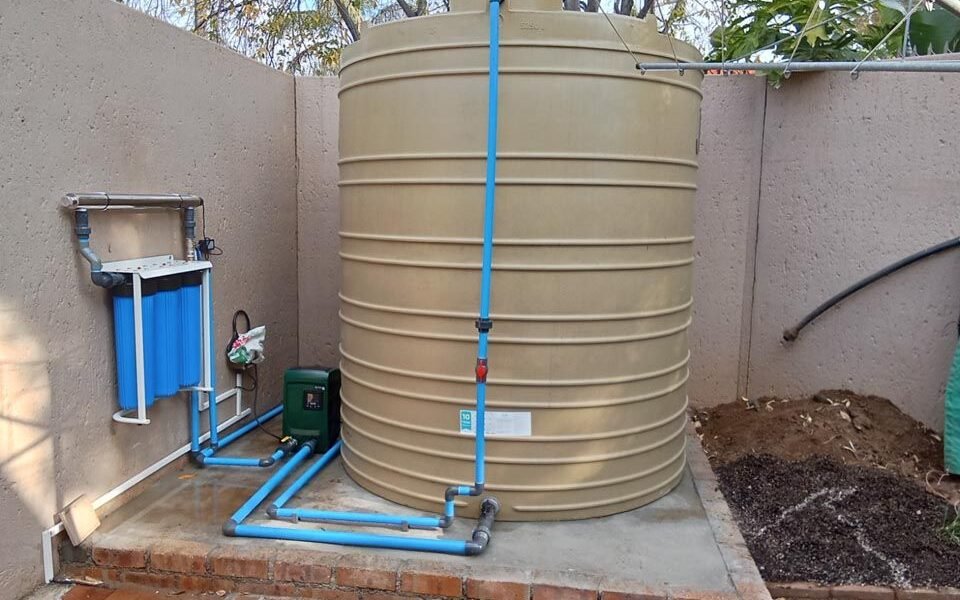
You’ve ordered your first bulk borehole water delivery. The bowser has arrived and emptied thousands of litres into your tank. Now what?
How you store and manage that water determines whether it stays clean, lasts as long as possible, and actually solves your water problem — whether you’re in Harare, Bulawayo, or anywhere else in Zimbabwe. Poor storage can turn a good delivery into a health risk within days.
Storage Tank Basics
Material matters. Food-grade polyethylene or fibreglass tanks are the standard for potable water. Avoid repurposed containers that previously held chemicals, fuel, or industrial liquids — the residue doesn’t wash out.
Keep it covered. An open tank invites algae, insects, and debris. A tight-fitting lid with a screened vent allows air exchange without contamination.
Elevation and access. If your tank feeds a gravity system, elevation matters. If you pump from the tank, keep the outlet positioned above the sediment layer that naturally builds up at the bottom over time.
Making a Delivery Last
The average Zimbabwean household uses between 50 and 100 litres per person per day when water flows freely. With delivered water, that number often drops — not because people use less, but because every bucket becomes something to think about.
- Prioritize drinking and cooking. Reserve the cleanest water for consumption; use stored water for cleaning and sanitation only once drinking needs are covered.
- Fix leaks immediately. A dripping tap or a leaking tank fitting can waste hundreds of litres a week.
- Reuse greywater. Water from rinsing vegetables or washing hands can go straight to the garden or a toilet cistern, easing pressure on the main supply.
Monitoring Quality
Delivered borehole water should arrive clear and odorless. If it looks cloudy, smells unusual, or leaves sediment, contact your supplier immediately.
Even good water can degrade in storage. If you’re holding water for more than two weeks, consider testing for microbial contamination — several private labs in Zimbabwe offer affordable water testing. For drinking water held longer term, a simple boil-and-cool routine before use adds an extra layer of safety.
Building a Rotation System
If you rely on regular bulk deliveries, don’t let the tank run to empty before ordering:
- Order at 25–30% capacity — this gives you a buffer if delivery is delayed.
- Keep a smaller reserve tank. A 200-litre drum stored in a cool, dark place works as an emergency drinking supply.
- Track your usage. After a few deliveries you’ll know how long a given volume lasts — use that to schedule orders before you run out.
Water security in Zimbabwe isn’t about waiting for the municipal supply to improve. It’s about building a system that works regardless of what the city can or can’t provide. A well-managed storage tank and a reliable bulk water supplier are the foundation of that system.
Set up your storage the easy way. Our Free Water Kit includes a 5,000L tank, booster pump, and stand — fully installed. See what’s included →
- September 24, 2026
- Views: 536
- 0
- How-To